

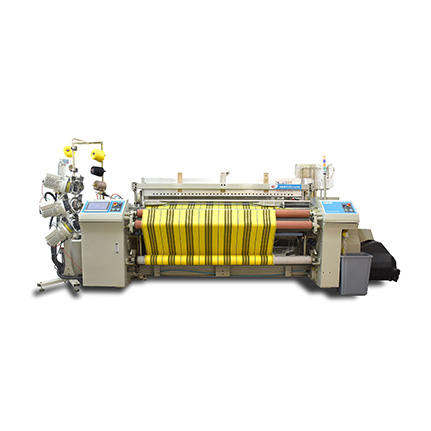
Air-jet looms are shuttleless looms that use jet air to pull the weft through the shed. The working principle is to use air as the weft insertion medium, and use the jetted compressed air flow to generate frictional traction on the weft yarn to pull the weft yarn through the shed, and achieve the purpose of weft insertion through the jet generated by the air jet. Weft breakage is one of the main faults of air-jet looms. Breaking weft often causes downtime, which seriously affects weaving production efficiency.
Below, we analyze the reasons for the common 5 kinds of weft breakage, and tell you the solutions. I hope this article will be helpful to the users of air-jet looms.
1. Uneven weft insertion length weft breakage
The length of the weft yarns introduced into the weaving fell is different, and the phenomenon of long and short weft appears. It is mainly caused by unstable length measurement and weft storage and insufficient weft insertion force.
Formation reason:
(1) Insufficient weft prewinding.
(2) The closing time of the electromagnetic needle is too early.
(3) The main nozzle is blocked by cotton yarn and the pressure is too low.
(4) The winding shape of the weft yarn is not good or the winding hardness is not appropriate. The quality of the weft yarn is poor, and there are many yarn defects, such as piecing, flying lint and thread adhesion.
Elimination method:
(1) Remove the flying flowers and check the air flow.
(2) Rewind the yarn correctly.
(3) Adjust the pressure according to the prescribed method and standard.
(4) Appropriately increase the pre-winding amount of the weft feeder.
(5) Delay the closing time of the electromagnetic needle.
(6) Increase the main nozzle pressure.
(7) Remove lint from clogging parts.
(8) Change the winding form of the weft yarn, improve the hardness of the weft cylinder, vigorously improve the quality of the weft yarn, and reduce yarn defects.
2. Yarn tip blow-break type weft break
It is mainly caused by the high air pressure of the weft insertion or the weak section of the weft yarn.
Formation reason:
(1) The pressure of the main nozzle is too high.
(2) The shear blowing is too strong.
(3) The weft yarn is uneven and the details of the yarn body are many.
Elimination method:
(1) Reduce the main nozzle pressure.
(2) Reduce the shear blowing pressure.
(3) Replace the weft yarn and take measures to improve the weft yarn quality.
3. Blow-break in the middle of the weft yarn
The weft insertion force is too strong, the action time is too long, or the weft yarn details are blown off within the width of the fabric, causing the loom to stop or form double sparse defects.
Formation reason:
(1) The weft release angle is too small.
(2) The pressure of the main and auxiliary nozzles is too high, the opening (start and end time) is too large, and the injection angle of the auxiliary nozzles is too large.
(3) Weft yarns have details and weak yarns.
Elimination method:
(1) Properly increase the release angle.
(2) Reduce the pressure of the main and auxiliary nozzles, check the flight curve of the weft yarn, reduce the opening (start and end time), avoid excessive air injection, and reduce the injection angle of the auxiliary nozzles.
(3) Change the weft yarn to improve the quality of the weft yarn.
4. Shear error type weft breakage
Shear error type weft breakage is formed when the weft yarn on the main nozzle side is not cut after weft insertion and before beating up.
Formation reason:
(1) The scissors blade cloth is sharp and the meshing is poor.
(2) The installation position of the scissors is not good, and the cutting time is not standard.
(3) The shear blowing pressure is too low.
(4) The weft yarn arrives at the opposite side later.
Elimination method:
(1) Grind the blade periodically and adjust the meshing well.
(2) Correct the position according to the scissors installation specification, and adjust the time.
(3) Appropriately reduce the cutting blowing pressure.
(4) Increase the pressure of the main and auxiliary nozzles and prolong the jetting time of the auxiliary nozzles.
5. Error stop
The weft yarn reaches normal, but due to the abnormal flight of the weft yarn, the skein yarn, the weft edge yarn, and the electrical failure, the no-weft yarn arrival signal is sent by mistake, resulting in the shutdown.
Formation reason:
(1) It is not normal for the weft yarn to enter the weft-catching edge yarn.
(2) The skein yarn on the right side is loose.
(3) The shape or position of the weft yarn reaching the probe is not correct.
(4) There is a problem with the cable of the weft probe, or the surface of the reflection area of the steel port of the probe is not clean.
(5) The sensitivity of the weft probe is poor, and the detection board is faulty.
(6) The gap between the weft probe and the reed is not suitable.
(7) Vibration of special-shaped reed teeth.
Elimination method:
(1) Adjust the nozzle position, remove lint, and solve the problem of weft slack.
(2) Adjust the tension of the edging yarn to make the edging yarn reed meet the specifications.
(3) Adjust the angle of the last group of auxiliary nozzles and keep the distance from the weft probe WWF1 at about 50mm.
(4) Replace the faulty weft probe in time, and keep the probe and reed clean frequently.
(5) Check the sensitivity of the weft yarn detector so that it is not empty. At the same time check and replace the weft detection board.
(6) Adjust the gap between the weft probe and the reed according to the installation specifications.
(7) The black tape is glued on the reed, which can not only reduce the vibration of the reed teeth, but also prevent the spread of the jet air flow of the reed.
Below, we analyze the reasons for the common 5 kinds of weft breakage, and tell you the solutions. I hope this article will be helpful to the users of air-jet looms.
1. Uneven weft insertion length weft breakage
The length of the weft yarns introduced into the weaving fell is different, and the phenomenon of long and short weft appears. It is mainly caused by unstable length measurement and weft storage and insufficient weft insertion force.
Formation reason:
(1) Insufficient weft prewinding.
(2) The closing time of the electromagnetic needle is too early.
(3) The main nozzle is blocked by cotton yarn and the pressure is too low.
(4) The winding shape of the weft yarn is not good or the winding hardness is not appropriate. The quality of the weft yarn is poor, and there are many yarn defects, such as piecing, flying lint and thread adhesion.
Elimination method:
(1) Remove the flying flowers and check the air flow.
(2) Rewind the yarn correctly.
(3) Adjust the pressure according to the prescribed method and standard.
(4) Appropriately increase the pre-winding amount of the weft feeder.
(5) Delay the closing time of the electromagnetic needle.
(6) Increase the main nozzle pressure.
(7) Remove lint from clogging parts.
(8) Change the winding form of the weft yarn, improve the hardness of the weft cylinder, vigorously improve the quality of the weft yarn, and reduce yarn defects.
2. Yarn tip blow-break type weft break
It is mainly caused by the high air pressure of the weft insertion or the weak section of the weft yarn.
Formation reason:
(1) The pressure of the main nozzle is too high.
(2) The shear blowing is too strong.
(3) The weft yarn is uneven and the details of the yarn body are many.
Elimination method:
(1) Reduce the main nozzle pressure.
(2) Reduce the shear blowing pressure.
(3) Replace the weft yarn and take measures to improve the weft yarn quality.
3. Blow-break in the middle of the weft yarn
The weft insertion force is too strong, the action time is too long, or the weft yarn details are blown off within the width of the fabric, causing the loom to stop or form double sparse defects.
Formation reason:
(1) The weft release angle is too small.
(2) The pressure of the main and auxiliary nozzles is too high, the opening (start and end time) is too large, and the injection angle of the auxiliary nozzles is too large.
(3) Weft yarns have details and weak yarns.
Elimination method:
(1) Properly increase the release angle.
(2) Reduce the pressure of the main and auxiliary nozzles, check the flight curve of the weft yarn, reduce the opening (start and end time), avoid excessive air injection, and reduce the injection angle of the auxiliary nozzles.
(3) Change the weft yarn to improve the quality of the weft yarn.
4. Shear error type weft breakage
Shear error type weft breakage is formed when the weft yarn on the main nozzle side is not cut after weft insertion and before beating up.
Formation reason:
(1) The scissors blade cloth is sharp and the meshing is poor.
(2) The installation position of the scissors is not good, and the cutting time is not standard.
(3) The shear blowing pressure is too low.
(4) The weft yarn arrives at the opposite side later.
Elimination method:
(1) Grind the blade periodically and adjust the meshing well.
(2) Correct the position according to the scissors installation specification, and adjust the time.
(3) Appropriately reduce the cutting blowing pressure.
(4) Increase the pressure of the main and auxiliary nozzles and prolong the jetting time of the auxiliary nozzles.
5. Error stop
The weft yarn reaches normal, but due to the abnormal flight of the weft yarn, the skein yarn, the weft edge yarn, and the electrical failure, the no-weft yarn arrival signal is sent by mistake, resulting in the shutdown.
Formation reason:
(1) It is not normal for the weft yarn to enter the weft-catching edge yarn.
(2) The skein yarn on the right side is loose.
(3) The shape or position of the weft yarn reaching the probe is not correct.
(4) There is a problem with the cable of the weft probe, or the surface of the reflection area of the steel port of the probe is not clean.
(5) The sensitivity of the weft probe is poor, and the detection board is faulty.
(6) The gap between the weft probe and the reed is not suitable.
(7) Vibration of special-shaped reed teeth.
Elimination method:
(1) Adjust the nozzle position, remove lint, and solve the problem of weft slack.
(2) Adjust the tension of the edging yarn to make the edging yarn reed meet the specifications.
(3) Adjust the angle of the last group of auxiliary nozzles and keep the distance from the weft probe WWF1 at about 50mm.
(4) Replace the faulty weft probe in time, and keep the probe and reed clean frequently.
(5) Check the sensitivity of the weft yarn detector so that it is not empty. At the same time check and replace the weft detection board.
(6) Adjust the gap between the weft probe and the reed according to the installation specifications.
(7) The black tape is glued on the reed, which can not only reduce the vibration of the reed teeth, but also prevent the spread of the jet air flow of the reed.